The corner letters on Great Britain line-engraved stamps are among the most important features used by collectors. They identify a stamp's original position on the printing sheet and provide vital evidence when plating Penny Blacks, Twopenny Blues and Penny Reds.
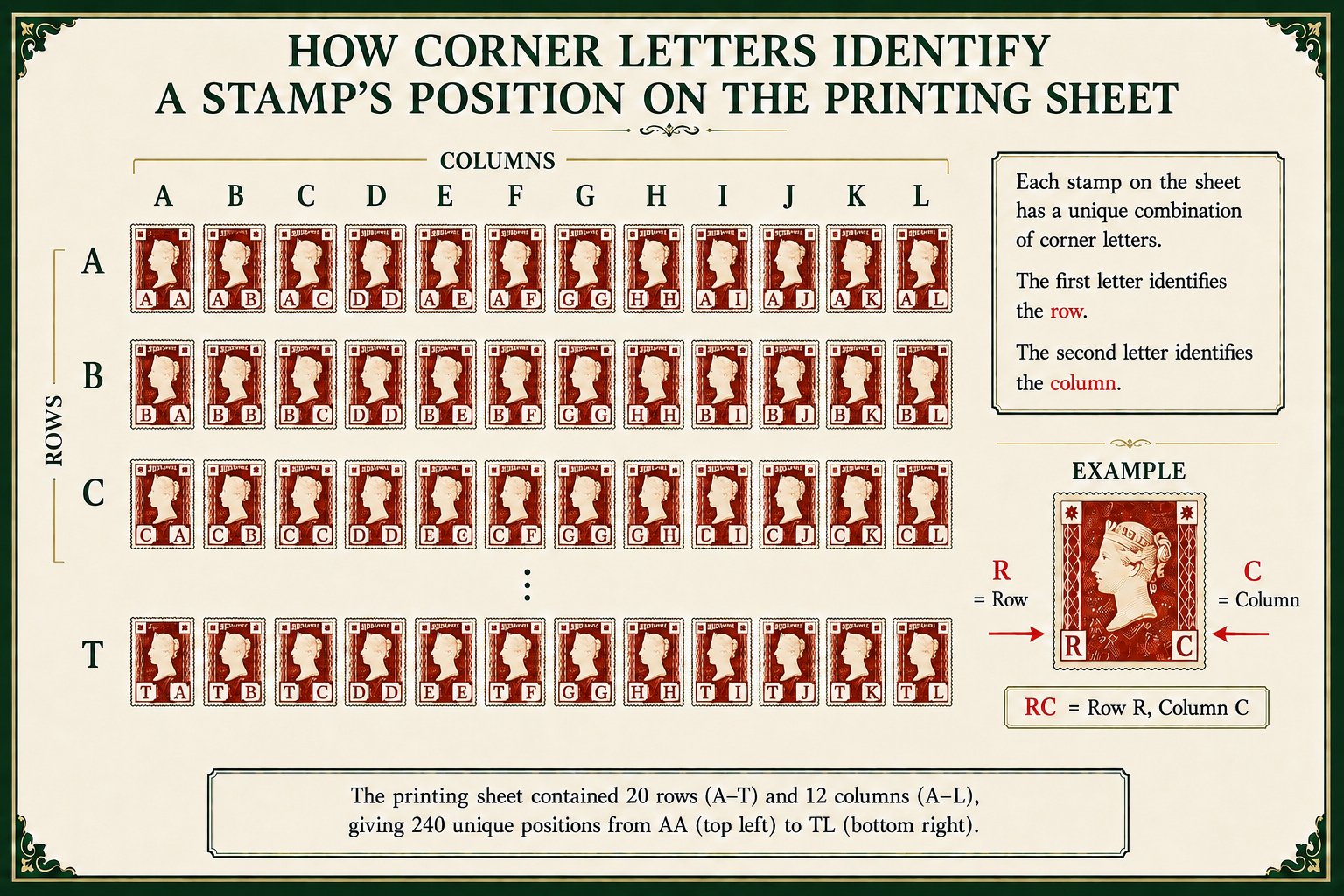
What are corner letters?
Corner letters are the letters found in the corner squares of many Great Britain line-engraved stamps. On early stamps they appear in the lower corners, while later line-engraved issues eventually carried letters in all four corners.
The letters identify the stamp's position on the original printing sheet. A stamp lettered RC, for example, came from row R and column C.
How the lettering system worked
A full sheet contained 240 stamps arranged in 20 horizontal rows and 12 vertical columns. The rows were lettered from A to T, and the columns from A to L. This created 240 unique positions from AA at the top left to TL at the bottom right.
This system was originally introduced as a security precaution against forgery. If every stamp on a sheet carried a different letter combination, it became much harder for a forger to reproduce a whole sheet convincingly.
How the letters were added
On most plates, the corner letters were entered into the printing plates by hand using hardened steel letter punches. Each punch was positioned within its allotted corner square and then struck into the plate, creating a permanent impression.
As every letter was entered individually, small variations in position, alignment and appearance were inevitable. In some cases a letter could be placed high, low, left or right within the square. A letter might be struck more than once, or in rare cases the wrong letter could be entered.
Letter positions vary
Letter placement was rarely perfectly central within the corner squares. The letter might sit close to a frame line, lean slightly, appear weak, look heavy, or sit noticeably off-centre within its square.
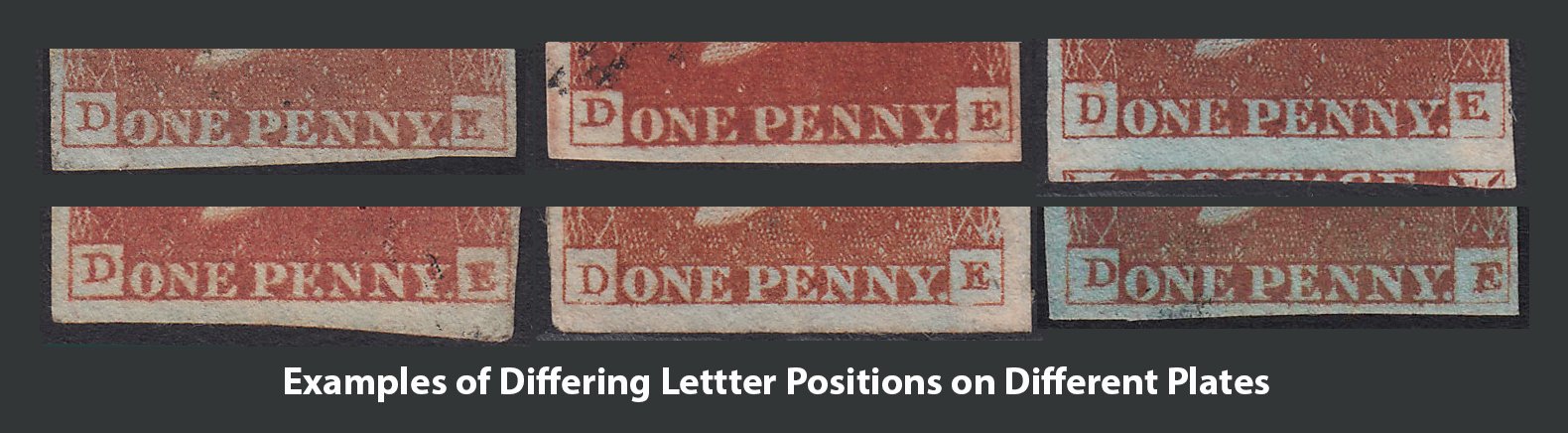
Because the letters were entered by hand, their exact position within the corner squares could vary from plate to plate. These differences can provide useful clues when identifying the plate from which a stamp was printed.
Why the same letter can look different
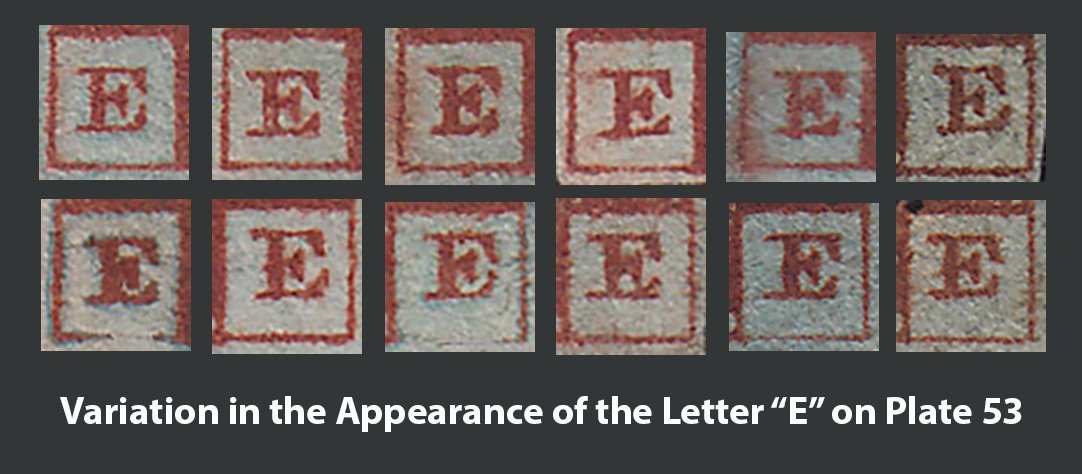
Even letters from the same plate and the same punch can appear surprisingly different. These differences may be caused by punch alignment, strike pressure, inking, wear and other aspects of the printing process.
Double letters
Double letters occur when the punched letter appears doubled. This may result from a second strike, a slight movement of the punch, or another form of disturbance during entry of the letter.
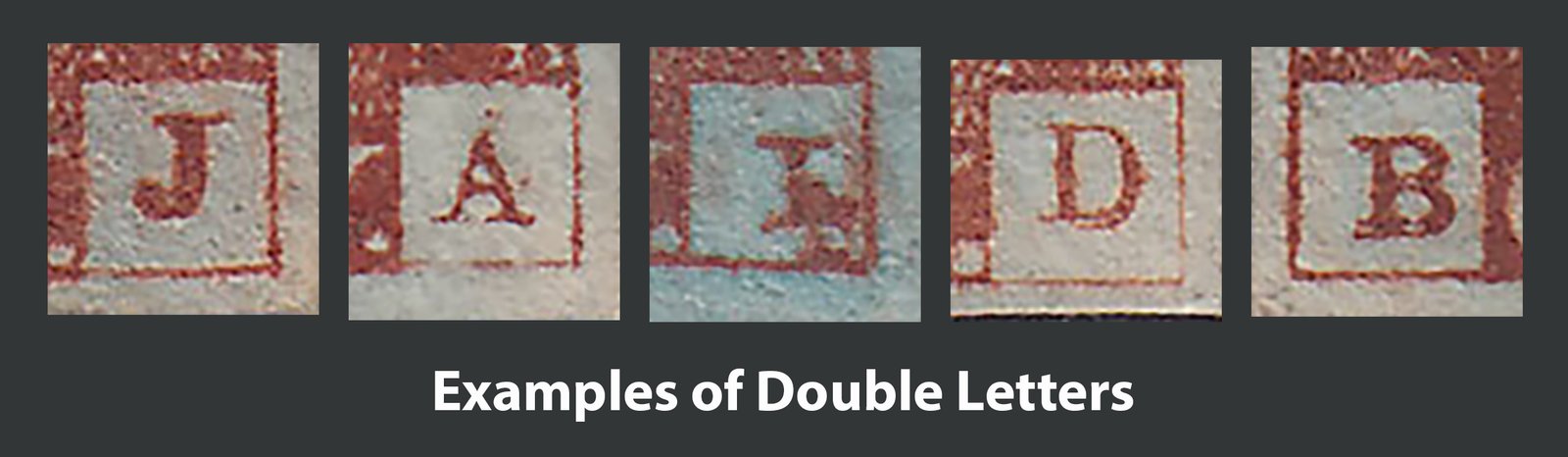
Double letters are of particular interest to specialist collectors because they can provide useful positional evidence and may help confirm a plating attribution.
The four alphabets
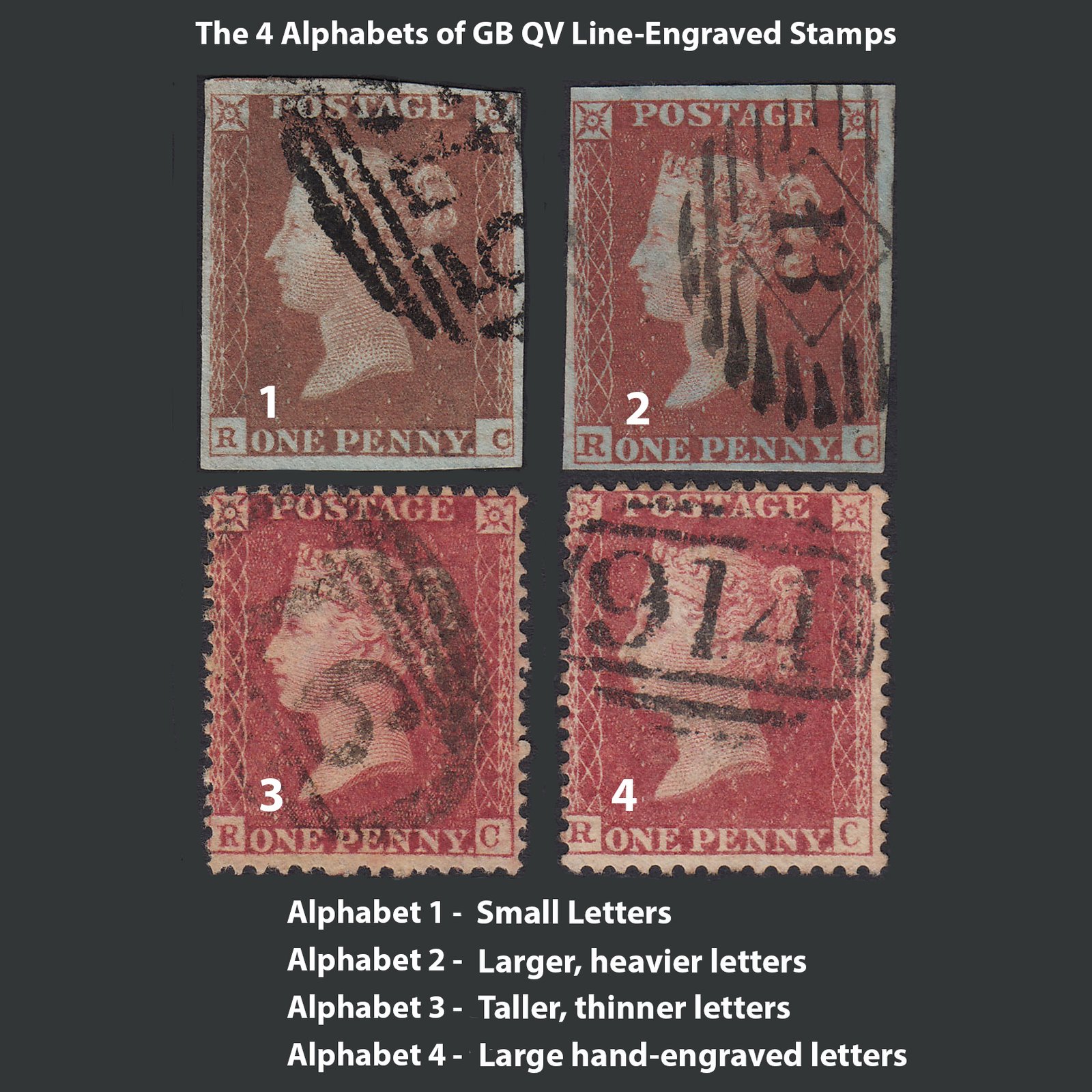
Collectors recognise four principal alphabet styles on the Great Britain line-engraved issues. These alphabets are important because the size, shape and style of the letters can provide valuable evidence when identifying and plating stamps.
- Alphabet I — small letters.
- Alphabet II — larger and heavier letters.
- Alphabet III — taller and generally thinner letters.
- Alphabet IV — mostly large hand-engraved letters.
Corner letters and plating
Plating is the process of identifying the original plate and position from which a stamp was printed. The corner letters are essential because they identify the position on the sheet.
For example, if a stamp is lettered RC, the collector knows the stamp came from position RC. The remaining task is to determine which plate produced that particular RC impression.
This is done by comparing the stamp with known plate characteristics, including:
- letter shape and position;
- frame line irregularities;
- corner square detail;
- guide lines and guide dots;
- re-entries and repairs;
- constant varieties and flaws;
- overall impression and plate wear.
Common misconceptions
"Every letter position should look the same"
False. Every plate had its own unique letter positions, and those positions could vary from plate to plate and from one state of a plate to another.
"A strange-looking letter must be a special listed variety"
Not necessarily. Many unusual-looking letters are simply the result of normal punching variation, wear, inking, paper condition or cancellation.
Summary
Corner letters are one of the most important features of Great Britain line-engraved stamps. They identify the stamp's original sheet position and provide vital evidence for plating.
Because the letters were entered individually, variation is normal. Understanding the alphabets, letter positions, double letters and normal variation in appearance can greatly improve a collector's ability to study and identify Penny Reds and other line-engraved stamps.